
LSTM(长短期记忆网络)
LSTM(Long Short-Term Memory)是 RNN 的关键升级版本,通过引入专用记忆通道(Cell State)和三个门控机制,解决了 RNN 的长距离依赖问题,成为 Transformer 出现前最强大的序列建模工具。
1. 为什么需要 LSTM?
RNN 的致命弱点:梯度消失导致无法记住远距离信息。
LSTM 的解决方案:引入两个状态 + 三个"门":
RNN:  仅有 h_t(单一隐藏状态)
LSTM: h_t(短期记忆,对外输出)
      c_t(长期记忆,内部传输高速公路)
2. LSTM 结构总览
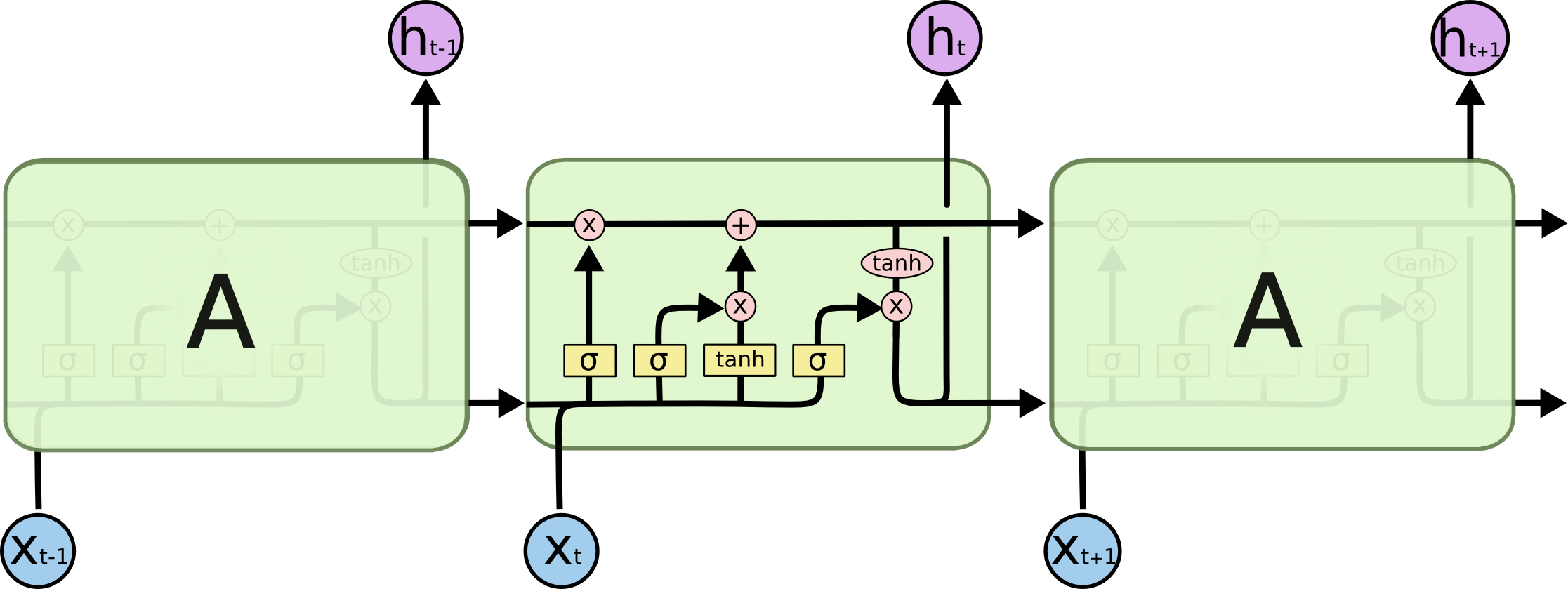
LSTM 在每个时间步维护两个状态:
:隐藏状态(短期记忆,对外输出) :单元状态(长期记忆,内部高速公路)
核心创新:
3. 三个门控机制详解
遗忘门(Forget Gate)— 决定遗忘什么
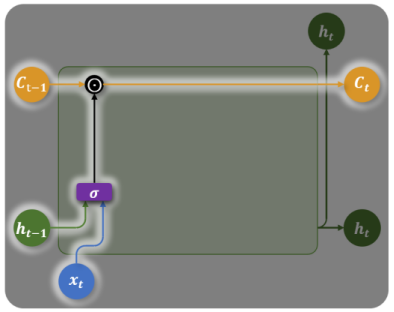
- 输入:当前输入
+ 上一步隐藏状态 - 输出:
之间的向量(0=完全遗忘,1=完全保留) - 乘以旧记忆
,决定哪些历史信息要丢掉
比喻:读到新段落的第一句话,决定之前的主语信息是否还有用。
输入门(Input Gate)— 决定记住什么
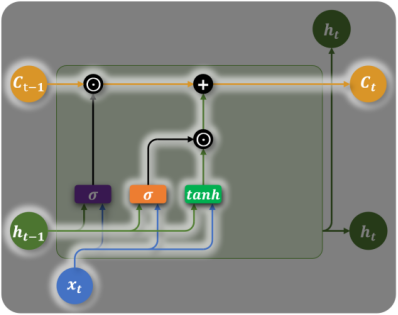
:控制当前信息的写入比例 :候选记忆(当前时间步提取的新信息) - 单元状态更新:旧记忆(遗忘后)+ 新信息(写入后)
关键:
输出门(Output Gate)— 决定输出什么
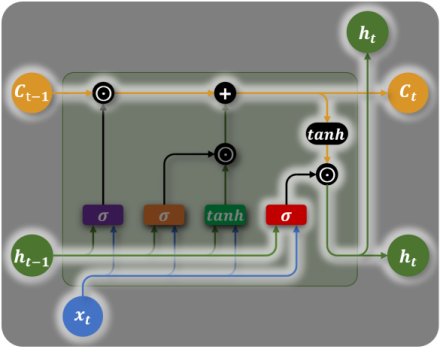
:控制记忆单元中哪些信息对外输出 - 对
压缩到 再过滤输出
4. 完整公式汇总
| 门控 | 公式 | 作用 |
|---|---|---|
| 遗忘门 | 决定遗忘旧记忆的比例 | |
| 输入门 | 决定写入新记忆的比例 | |
| 候选记忆 | 当前时间步的候选新信息 | |
| 记忆更新 | 加法更新(关键!) | |
| 输出门 | 决定当前对外输出的内容 | |
| 隐藏状态 | 对外输出的短期记忆 |
5. 变量维度
| 变量 | 维度 | 含义 |
|---|---|---|
[batch, seq_len, input_dim] | 输入序列 | |
[batch, hidden_dim] | 每步隐藏状态(对外输出) | |
[batch, hidden_dim] | 每步单元状态(内部长期记忆) | |
[batch, hidden_dim] | 各门控输出 |
6. PyTorch 实现
基础使用
python
import torch
import torch.nn as nn

class LSTMModel(nn.Module):
    def __init__(self, input_dim, hidden_dim, output_dim, num_layers=1):
        super().__init__()
        self.lstm = nn.LSTM(
            input_size=input_dim,
            hidden_size=hidden_dim,
            num_layers=num_layers,
            batch_first=True,
            dropout=0.3 if num_layers > 1 else 0,
            bidirectional=False   # 单向 LSTM
        )
        self.fc = nn.Linear(hidden_dim, output_dim)
        self.dropout = nn.Dropout(0.3)

    def forward(self, x):
        # output: [batch, seq_len, hidden_dim]
        # h_n:    [num_layers, batch, hidden_dim]
        # c_n:    [num_layers, batch, hidden_dim]
        output, (h_n, c_n) = self.lstm(x)

        # 取最后一个时间步用于分类
        last_output = output[:, -1, :]        # [batch, hidden_dim]
        return self.fc(self.dropout(last_output))

# 使用
model = LSTMModel(input_dim=100, hidden_dim=256, output_dim=2)
x = torch.randn(32, 20, 100)   # [batch=32, seq_len=20, input=100]
out = model(x)
print(out.shape)                # [32, 2]
双向 LSTM(Bidirectional LSTM)
双向 LSTM 同时从正向和反向处理序列,捕获更完整的上下文:
python
class BiLSTMClassifier(nn.Module):
    def __init__(self, vocab_size, embed_dim, hidden_dim, output_dim):
        super().__init__()
        self.embedding = nn.Embedding(vocab_size, embed_dim)
        self.lstm = nn.LSTM(
            embed_dim, hidden_dim,
            batch_first=True, bidirectional=True  # 双向
        )
        # 双向输出拼接,维度 * 2
        self.fc = nn.Linear(hidden_dim * 2, output_dim)
        self.dropout = nn.Dropout(0.3)

    def forward(self, x):
        embedded = self.dropout(self.embedding(x))   # [batch, seq, embed]
        output, (h_n, c_n) = self.lstm(embedded)

        # 拼接正向最后 + 反向最后的隐藏状态
        # h_n: [2, batch, hidden](2 = 双向)
        h_forward  = h_n[0, :, :]   # 正向最后时间步
        h_backward = h_n[1, :, :]   # 反向最后时间步
        h_cat = torch.cat([h_forward, h_backward], dim=1)   # [batch, hidden*2]

        return self.fc(self.dropout(h_cat))

model = BiLSTMClassifier(vocab_size=10000, embed_dim=128,
                         hidden_dim=256, output_dim=3)
多层堆叠 LSTM
python
# 2 层 LSTM,隐藏层之间加 Dropout
lstm = nn.LSTM(
    input_size=100,
    hidden_size=256,
    num_layers=2,       # 堆叠层数
    batch_first=True,
    dropout=0.3         # 层间 Dropout
)
7. LSTM 的局限性
三大核心缺陷
| 缺陷 | 原因 | Transformer 的改进 |
|---|---|---|
| 无法并行 | 自注意力:全序列并行 | |
| 仍有长距离遗忘 | 100+ 步后仍有信息衰减 | Attention 直接建模任意两点关系 |
| 计算复杂 | 每步 4 个全连接(4× RNN 参数量) | 虽然参数多但可并行化 |
"LSTM 是设计精巧的蒸汽机,Transformer 是新时代的电力引擎。"
何时还使用 LSTM?
- 实时推理(Transformer 计算延迟高)
- 资源受限的边缘设备
- 短序列任务(< 200 步)
- 时间序列预测(不需要预训练的场景)
8. RNN vs LSTM vs Transformer
| 对比 | RNN | LSTM | Transformer |
|---|---|---|---|
| 状态 | 无序列状态(全局注意力) | ||
| 长依赖 | 差 | 中等(<100步) | 强(任意长度) |
| 并行性 | ❌ | ❌ | ✅ |
| 梯度消失 | 严重 | 缓解 | 无问题 |
| 主流地位 | 已基本淘汰 | 特定场景使用 | 当前主流 |
总结
| 特性 | LSTM |
|---|---|
| 提出时间 | 1997(Hochreiter & Schmidhuber) |
| 核心创新 | Cell State + 三门控(遗忘/输入/输出) |
| 关键优势 | 加法更新记忆,解决梯度消失 |
| 主要弱点 | 无法并行,长序列仍有遗忘 |
| 典型应用 | 机器翻译(Pre-Transformer时代),时序预测 |